

The queue for returns at the department store was not short. It snaked like a lazy river past racks of discounted sweaters and towers of bedsheets, a quiet river of patience. It was a Saturday afternoon, which meant a predictable hum of bodies and a dull symphony of cash registers ringing. I found myself near the end, cradling a small lamp that had arrived broken. The air here was always a mix of new plastic, perfume samples, and the faint, sweet smell of the cafe at the front of the store. My nose picked up on all of it, a constant, low-level buzz of information.
I had been standing for maybe fifteen minutes, lost in thought about how many steps I had already taken today. It was a habit I had, counting things, observing small details. The person in front of me was scrolling on their phone, their thumb moving fast. The person behind me was humming a tune I could not place. The line was moving, slowly, as return lines always do. It was not a race, it was a journey.
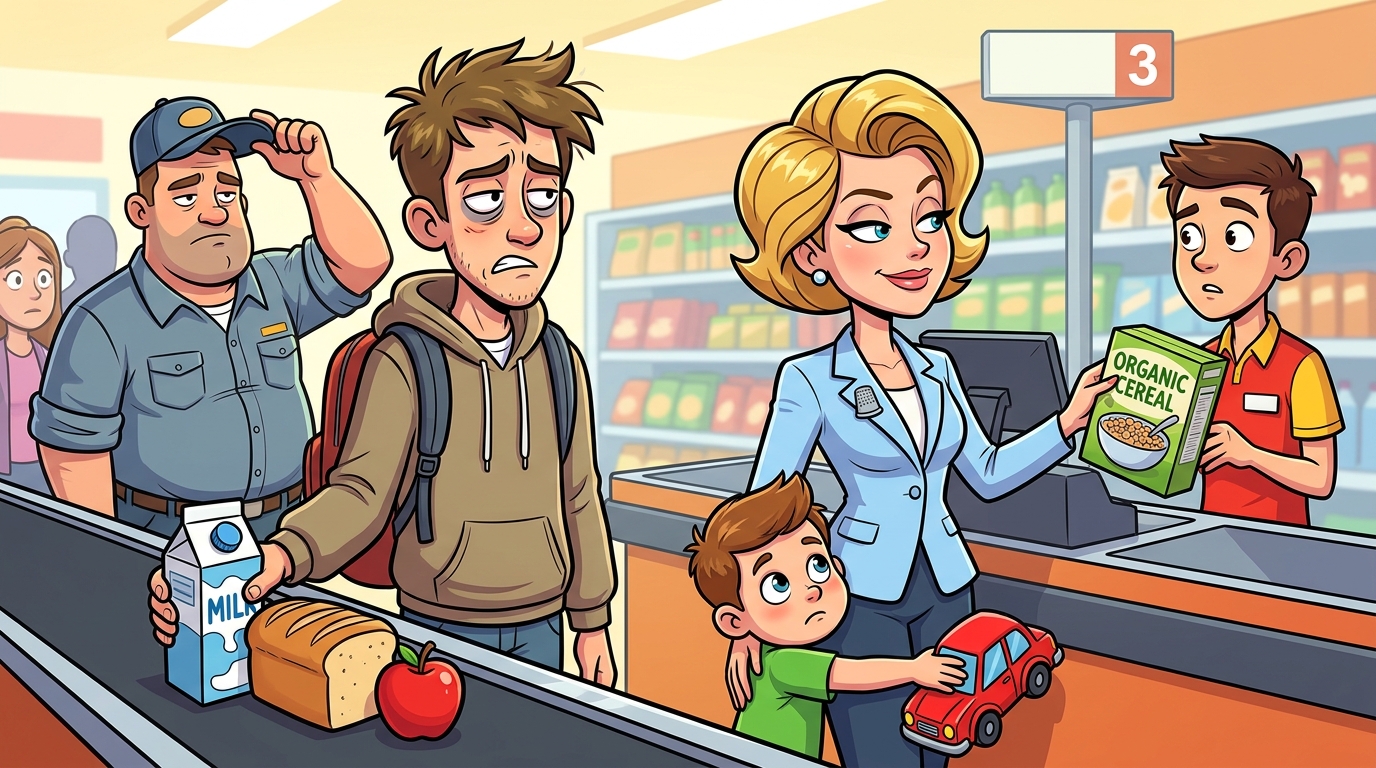
Then she appeared, pushing a stroller with a very small baby inside. Her hair was perfectly coiffed, a light blonde, and she wore a stylish, fitted blazer. She had an aura, a kind of brisk confidence that made her seem important, even in a department store. She moved with purpose, not toward the back of the line, but straight toward the front. My eyes, which often wander and collect little bits of information, tracked her path. I wondered, for a moment, if she worked here, but her clothes were too put-together, too expensive for the store’s uniform.
She stopped about four people from the front, right behind a man who was carefully arranging a stack of shirts in his basket. She did not ask if she could cut. She did not even look at him. She just inserted herself and her stroller into the line, as if the space had always been there, waiting for her. The man in front of her paused, his hand hovering over a blue polo shirt. He looked over his shoulder, a small question mark on his face. She did not acknowledge him.
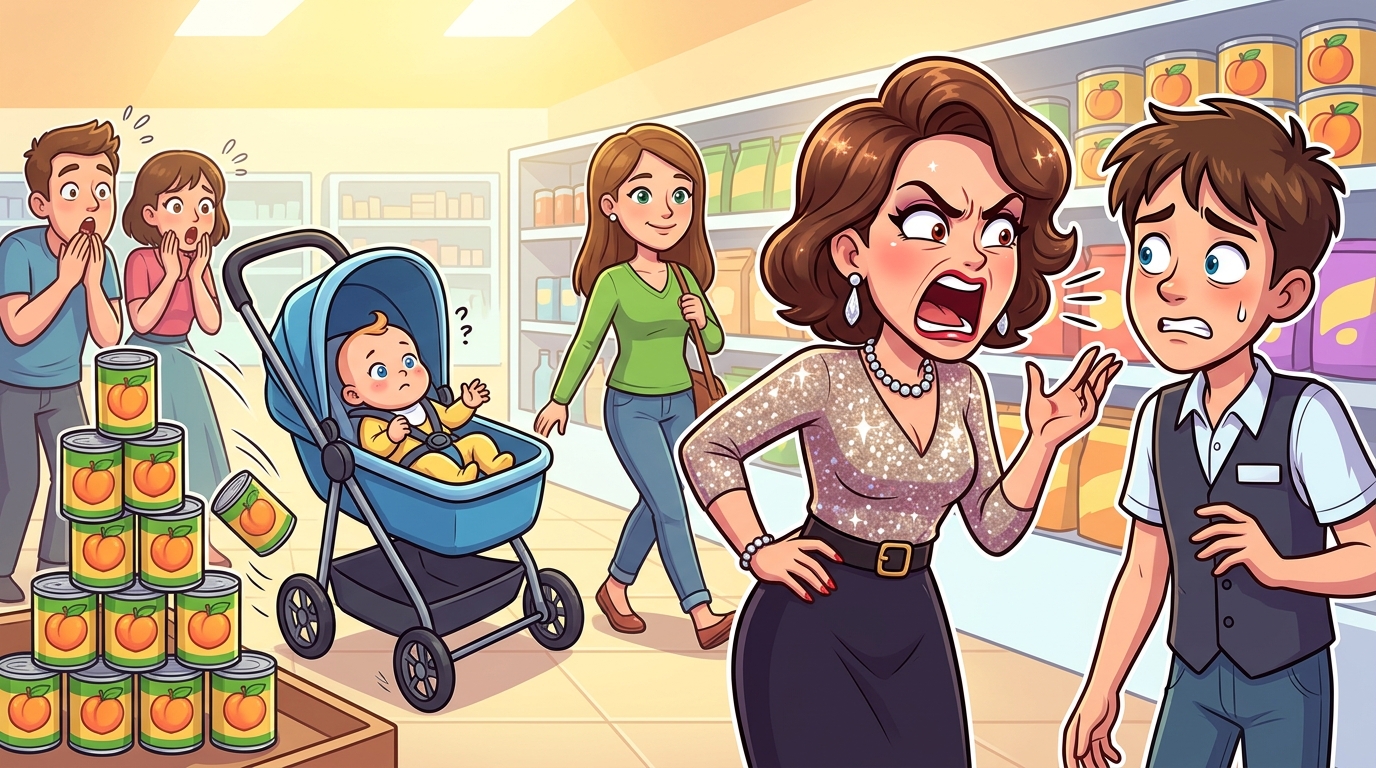
A woman, two spots behind where the new lady had inserted herself, spoke up, her voice a little tight. She said that everyone had been waiting for a long time. The new lady, without turning fully, replied that she had a baby and that she needed to get going. She gestured vaguely at the baby in the stroller, who was starting to fidget and make soft, unhappy noises.
The woman who spoke seemed surprised by the reply. She repeated that having a baby did not mean she could just cut in front of everyone. Other people in the line now looked, their murmurs like quiet waves. The man directly behind the new lady, who had been passed over, now cleared his throat. He said that it was not fair to the rest of the people.
The new lady finally turned, a faint smile on her face that did not reach her eyes. She said that she understood, but her situation was different. The baby was starting to whimper more loudly, a small, sad sound that cut through the general store noise. I could already smell it from my spot down the line, a faint sourness indicating a diaper that needed changing soon, a smell that would grow stronger quickly.
Another customer, a well-meaning man in a brightly colored golf shirt, stepped forward a little. He said that maybe the store had a separate line for mothers with babies. He was trying to be helpful, but his suggestion made the new lady wrinkle her nose. She said that she did not see one and that she was not going to walk all over the store looking. She turned her back to the line, clearly signaling that the conversation was over. The baby’s whimpers were now becoming cries, higher and more demanding.
The original woman who had spoken up sighed loudly. The man who had been cut in front of just shook his head and retreated into looking at his phone again. The general feeling of the line was a mix of annoyance and resignation. No one wanted a big scene. No one wanted to be the person to make it worse, even if they felt it was wrong. The baby’s cries were getting louder still. The faint sour smell was no longer so faint. It was growing distinct now, even for people without my sensitive nose. People nearby started to shift and glance at the stroller.
I thought about my own patience, which was like a long, flexible rope. It stretched far. But I also thought about the baby, whose cries were now sharp, almost a shriek. This small human was not enjoying the drama. I started to move forward, slowly, past the people who were now avoiding eye contact with the front of the line. I did not push or shove. I just walked, as if I had suddenly remembered something at the front of the store.
I stopped a few feet from the new lady, close enough to hear her shushing the baby, but her voice held a tight edge. The baby was flailing its tiny arms. I casually looked at the items near the line, then turned my head just a little. I said, not to her, but in a general way, that sometimes babies got so upset if they had to wait too long. I said that sometimes they really needed their diaper changed or a quick feeding to calm down. It was a simple observation, something anyone might say, like talking to myself.
She glanced at me, her expression a mix of surprise and annoyance. She said that the baby was fine. But her voice was a bit less firm. The baby, however, was clearly not fine. Its face was red and crumpled. The smell was now very prominent. The people closest to her were subtly adjusting their positions, trying to gain a little more distance.
I continued, still looking at the display of bath towels next to the line. I said that I had once read that a baby’s cries were like a special code. I said that a smart parent could always figure out what the code meant, even when it was hard. I spoke slowly, like someone thinking aloud, choosing each word with care. I said that it was amazing how quickly a baby could get comfortable and quiet once a smart parent knew exactly what they needed. It was a challenge, not a criticism.
She stopped shushing. She looked at her baby, then back at me. Her expression was thoughtful now, a different kind of calculation. The baby let out another piercing cry. The distinct smell was an undeniable fact. She looked down at the stroller, then at the long line ahead of her, and then at the faces of the people around her, who were now openly twitching their noses. She saw the looks, she felt the slight shifting away. Her intelligence meant she picked up on the subtle cues, the unspoken communication that the situation was becoming… messy.
She pursed her lips. She said, more to herself than to me, that perhaps the baby did need a moment, a change of scenery. She said that a quiet spot might be better for the little one. She turned the stroller around, slowly. She said that she would find a family restroom and then maybe try another line, a shorter one. She did not apologize. She did not acknowledge the line she had cut. But she moved away, pushing the crying baby toward a less crowded part of the store. The tension in the line, which had been stretched taut, now began to slowly unravel, like a spring released.
I watched her go, the baby’s cries fading into the background hum of the store. The line returned to its slow, quiet progression. The man in front of me went back to his phone. The woman who had originally complained let out a small, satisfied huff of air. I just stood there for a moment, the broken lamp still in my hand. I thought about that small, red-faced baby, whose discomfort had been used as a tool, and then as an excuse. I hoped the baby would get its diaper changed quickly. Babies should not have to be part of adult arguments.