
I work in an office building, which generally is a place I enjoy. The tasks are interesting, and many colleagues are pleasant. However, there is one significant issue that has always bothered me, and it is the temperature of the office. I am a person who feels the cold very intensely. My body simply does not generate enough internal warmth, it seems. My colleagues, they are often in short sleeves or light sweaters, even when the air conditioning is blasting. I do not comprehend how they can be so comfortable. For me, it is a constant chill that makes it very difficult to concentrate.
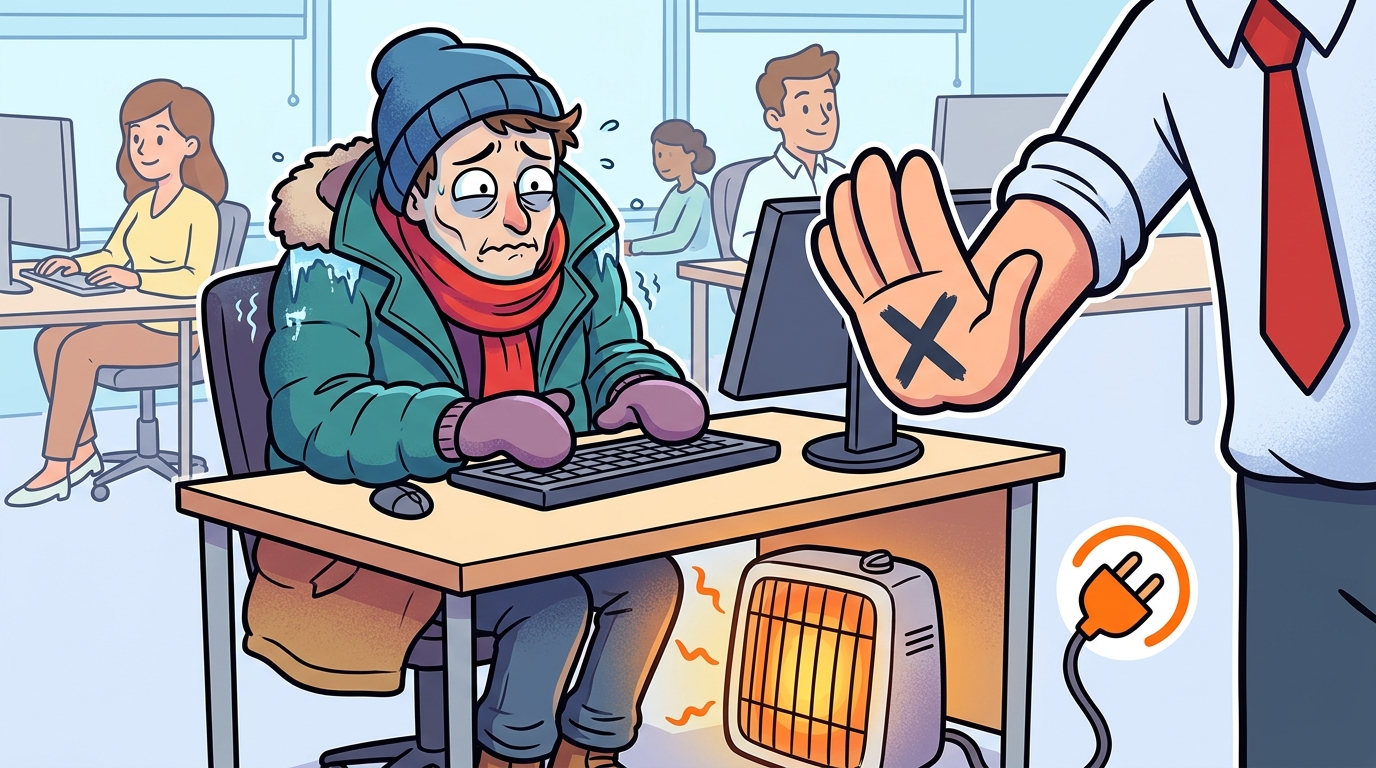
For several years now, I have maintained a solution for this problem: a small, personal space heater. It sits discreetly under my desk, providing a focused warmth that allows me to function optimally. This heater is not a cheap, dangerous device; I invested in a high-quality model with automatic shut-off and tip-over protection. It is, in my opinion, very safe. When I am warm, my mind is clear, my fingers are nimble, and my productivity is exceptional. Without it, I am shivering, distracted, and my work output suffers considerably. I truly believe that this heater is an essential tool for my performance, not a luxury.
About a month ago, our boss, Mr. Henderson, circulated an email to the entire staff. The subject line was “Important Office Safety Guidelines Update.” I opened it, expecting to see information about fire drills or emergency exits. Instead, among other minor points, it contained a clear directive: “Effective immediately, all personal heating devices, including electric space heaters, are strictly prohibited in the workplace due to potential fire hazards and excessive strain on the building’s electrical infrastructure.” My heart, it sank. I read it several times. This rule, I felt, could not possibly be intended for me and my specific situation. My heater is so small, so modern, so safe. It felt like a direct attack on my comfort and, by extension, my ability to do my job effectively.
I decided that the rule, while perhaps well-intentioned for older, less safe heaters or for people who are not as diligent as I am, did not apply to my particular case. My need for warmth is not a preference; it is a physiological necessity for my work. So, I continued to use my heater, ensuring it was positioned unobtrusively under my desk. I thought perhaps if it was out of sight, it would also be out of mind, and Mr. Henderson would not notice, especially since he rarely comes to my section of the office.
Unfortunately, my discretion was not enough. One morning, Mr. Henderson was doing a walk-through, something he does not do very often. He paused beside my desk, his eyes scanning the area. I saw his gaze land on the subtle glow emanating from beneath my desk. He knelt down slightly, confirming his suspicion. He straightened up, his expression stern. “Did you not receive my email about personal heating devices, [My Name]?” he asked, his voice low but firm. I explained, as calmly as I could, that I had received it, but that my situation was unique. “Mr. Henderson,” I said, “my heater is a very modern, safe model. And without it, I simply cannot work effectively. I am constantly cold, and my focus entirely shifts to trying to get warm, not to my tasks. My productivity, it will suffer greatly.”
He listened, but his face did not soften. “The rule applies to everyone, [My Name]. It’s a company-wide policy, decided by management for safety reasons. You need to unplug it and take it home. Immediately.” I felt a knot form in my stomach. It felt so unreasonable. Why could they not make exceptions for those who truly need it? I unplugged it, but I could not bring myself to take it home. I just slid it into my backpack, which I keep under my desk.
The rest of that day was awful. I shivered, I wore my coat inside, and my hands were so stiff I made numerous typing errors. My concentration was shattered. The next day, after enduring another hour of discomfort, I decided enough was enough. This rule was affecting my health and my job performance. Stealthily, I retrieved my heater from my backpack and plugged it in again, positioning it even more carefully than before, hoping it would go unnoticed.
However, it seemed someone must have reported me, or Mr. Henderson has eyes everywhere. Later that afternoon, he approached my desk again, and this time, his face was red with clear anger. He did not even ask. “This is unacceptable, [My Name]! You are blatantly disregarding a direct instruction and a critical company safety policy. This is your final warning. If I see that device again, we will be forced to take disciplinary action, up to and including termination of your employment.”
I tried one last time to make him understand. “Mr. Henderson, please, I understand policies. But this one, it is causing me significant distress and reducing my ability to perform. My heater is safe. It helps me. Is it not in the company’s best interest for me to be comfortable and productive, rather than shivering and making mistakes?” He just shook his head, looking completely exasperated, and walked away without another word.
Now, I am in a very difficult position. I need this job, but I also genuinely need to be comfortable to do it well. It feels like they are forcing me to choose between my physical well-being and my employment. My colleagues, they are not helpful. They just suggest “layering” or “drinking hot tea,” which are clearly inadequate solutions for someone who genuinely feels the cold like I do. They do not understand that my body is different. I feel targeted and unfairly treated for wanting to contribute my best work in an environment that suits my unique needs. The company should be more flexible and accommodating of individual differences, not imposing rigid rules that harm dedicated employees.
Was I wrong to continue using my heater? I truly believe I was simply advocating for my own well-being and ensuring I could perform my job duties to the highest standard. My comfort is not a whim; it is directly tied to my professional effectiveness. Should I genuinely be expected to suffer and underperform because of a general rule that, in my specific case, does not even pose a real safety risk? Please, tell me truthfully what you think. Am I The Jerk?